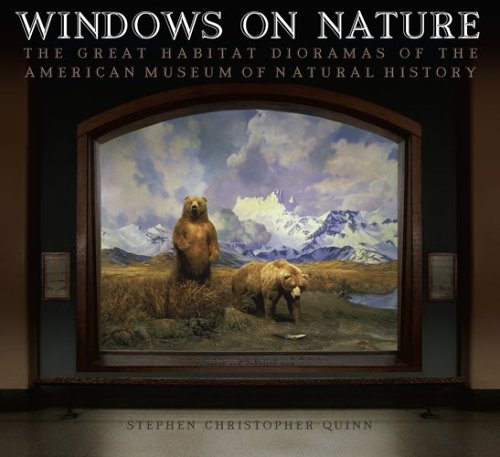
I found Windows on Nature: The Great Habitat Dioramas of the American Museum of Natural History by Stephen Christopher Quinn in a local thrift store for fifty cents. Further inspection led the revelation that it is a signed copy- bonus!
From the publisher’s description:
New York City’s American Museum of Natural History is a national treasure, attracting four million visitors annually. Its dioramas-a dazzling mixture of nature, science, and art-have inspired young and old alike, and are world-renowned examples of the unique diorama craft: art in the service of science. Now, in the only book of its kind, readers get an insider’s view of these “windows on nature,” witnessing their creation step by meticulous step.
More than forty of the museum’s finest dioramas are featured here, depicting the fauna and flora of myriad ecological environments. Stephen Quinn, a diorama artist at the museum, introduces the explorers, naturalists, painters, sculptors, taxidermists, and conservationists behind these three-dimensional marvels, and explains how their collaborations make the displays so lifelike. This enchanting book is the perfect gift for nature lovers, art enthusiasts, and museum goers everywhere.
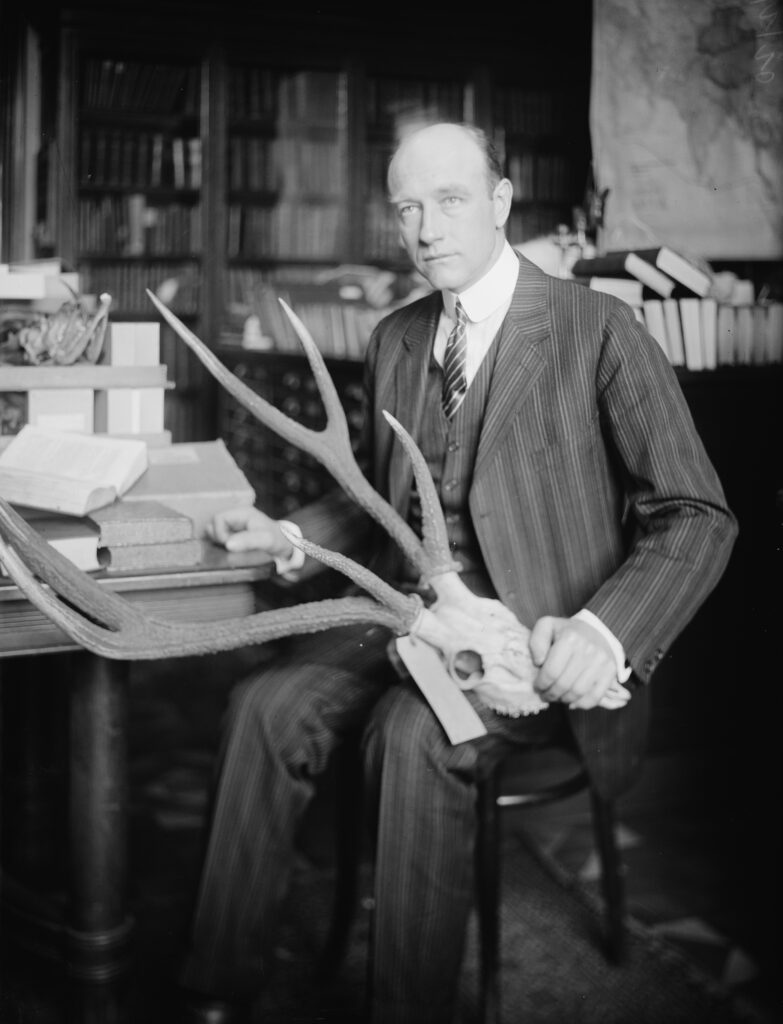
I’ve always loved dioramas, especially the life sized versions in natural history museums. The Chicago Field Museum has some famously beautiful examples, as does the American Natural History Museum in New York. I was hoping Windows on Nature would have information about Roy Chapman Andrews, the “real life Indiana Jones” who worked at the museum for most of his life. There, he moved up from sweeping the floors in 1906 to serving as museum director from 1933 until 1941 when he resigned to focus on writing (reference). There is a little bit about his involvement in the Musk Oxen diorama when he was director, but that’s about it.
Even so, it looks to be a fascinating book, ideal for picking up and reading through a bit at a time. I think I’ll keep it near at hand and try to read about one diorama a day until I’ve finished it.