Stuart texted me a link to the Forager Chef’s recent post about Green Walnut Syrup this morning. No context, just the link. But after 22 years of marriage, you don’t need words. Moods and meanings are easy to infer.
I immediately replied with “Oh yeah! Where can we find green walnuts? Do black walnuts count?” He assured me they do, so I reiterated, where can we find them in a forgeable location- i.e. not someone’s front yard, not by the highway, not in a preserve where gathering isn’t allowed?
Luckily Stuart’s mind is a map and he has dropped many pins on plant locations, especially if those plants make food.
After some back and forth, we settled on LaSalle Fish and Wildlife. This area explicitly allows foraging:
Mushrooms, berries, and nuts may be gathered; however, a written permit is required to remove plants, animals, rocks, and fossils.
American Lotus
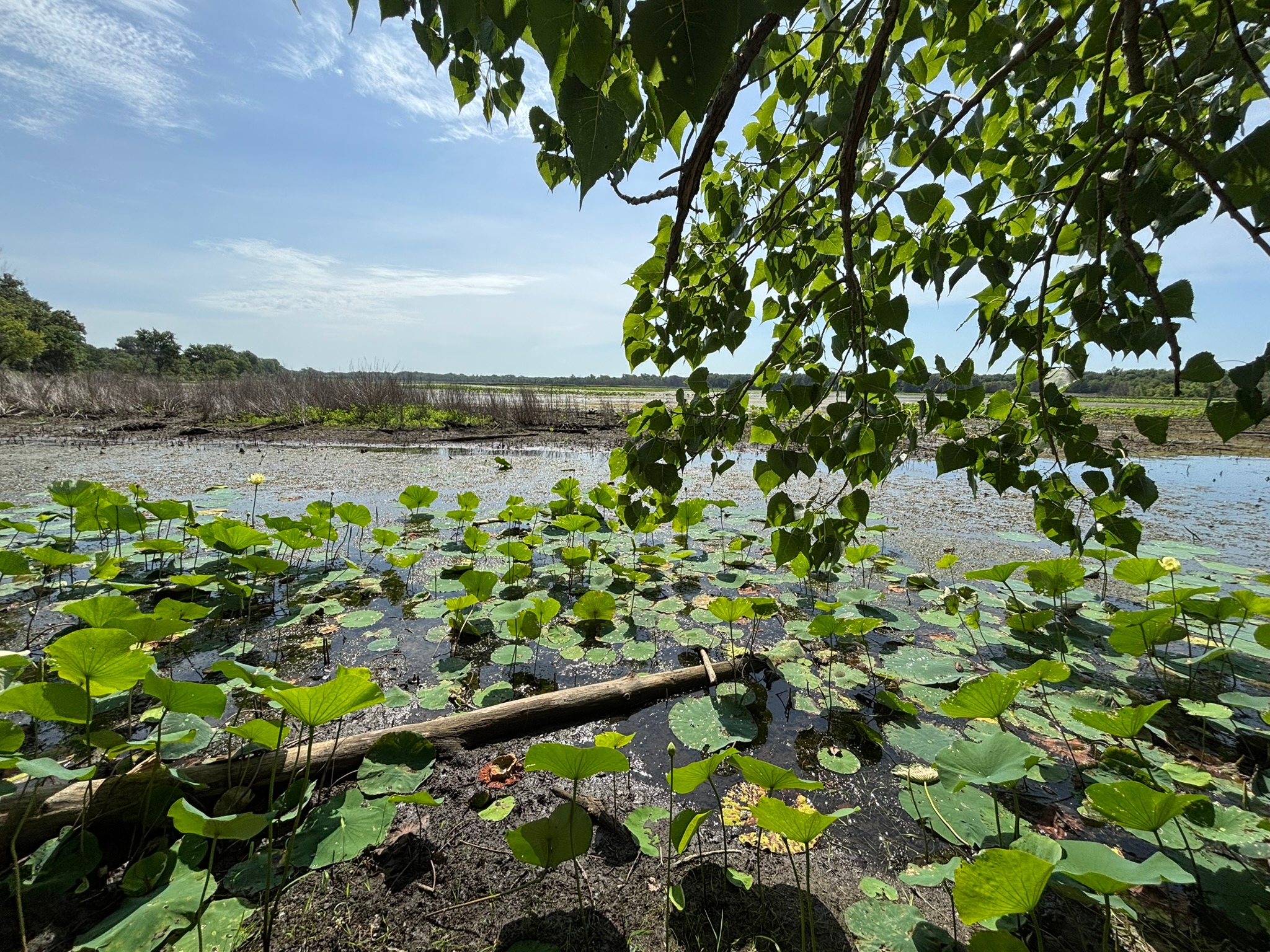
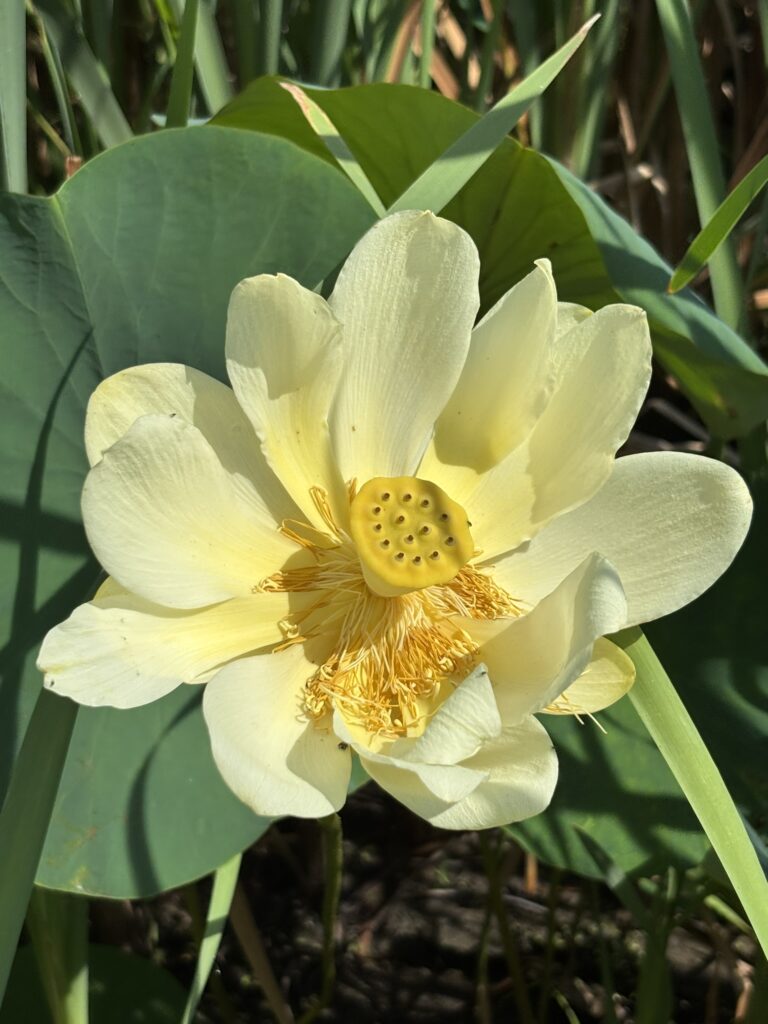
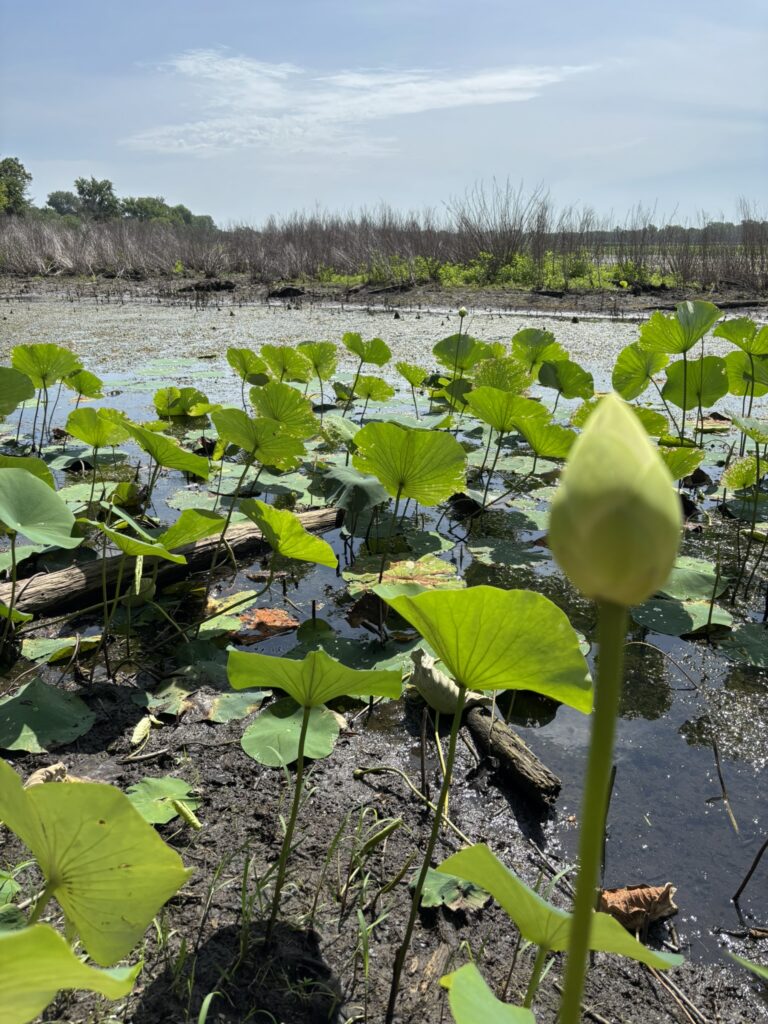
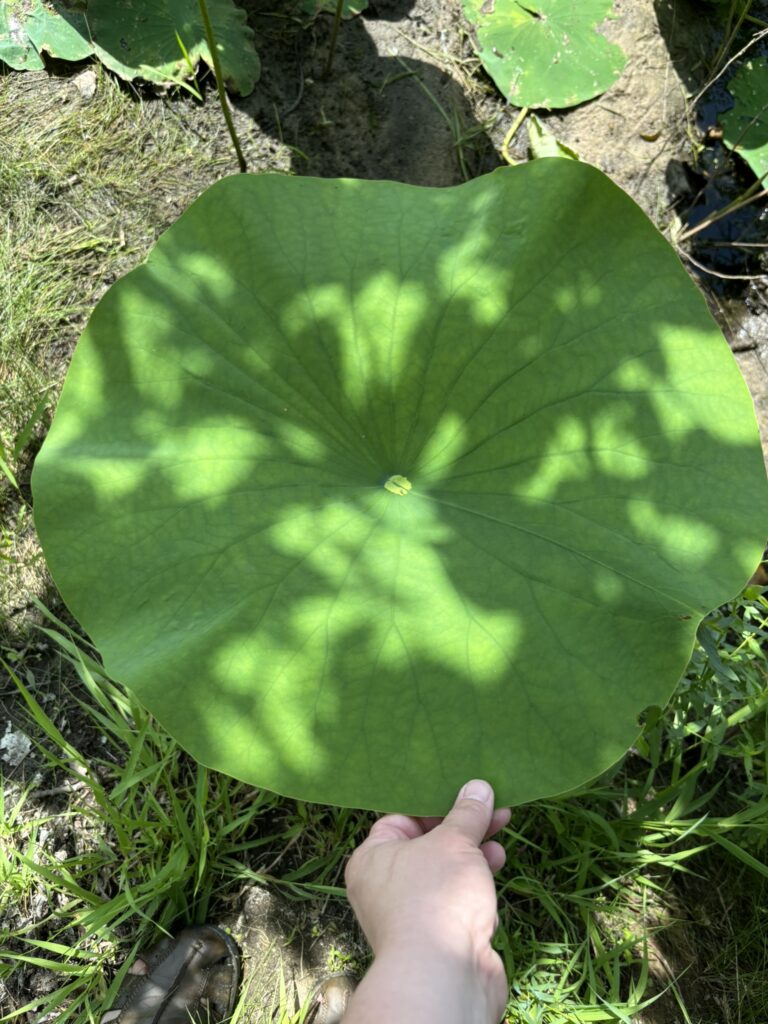
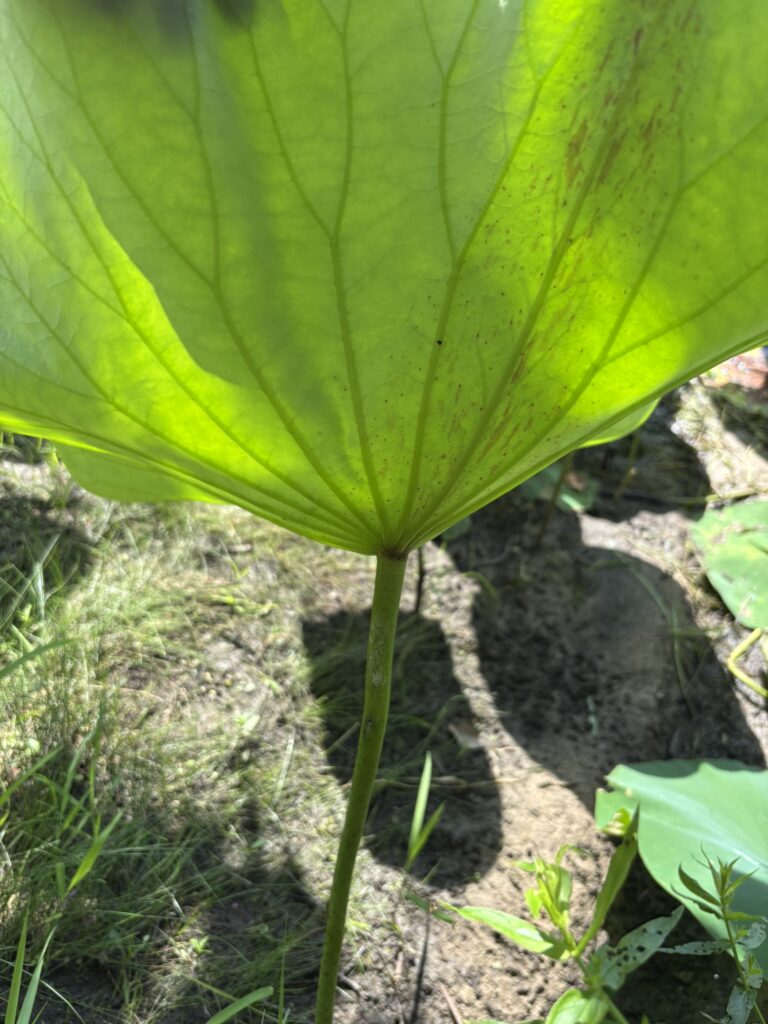
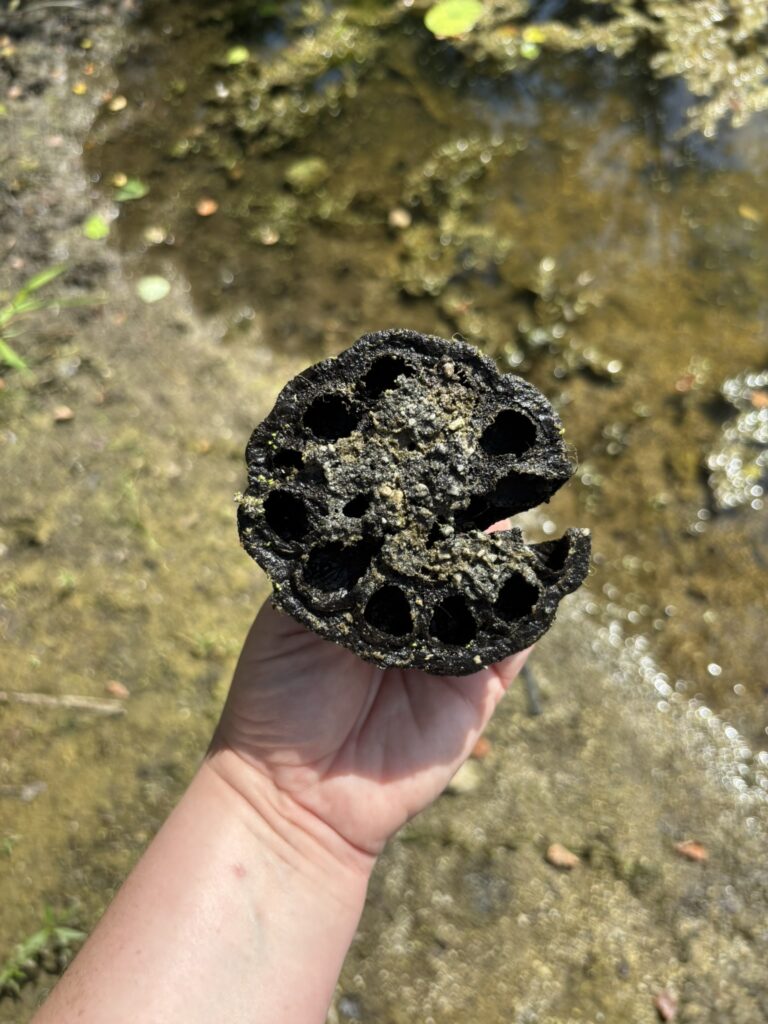
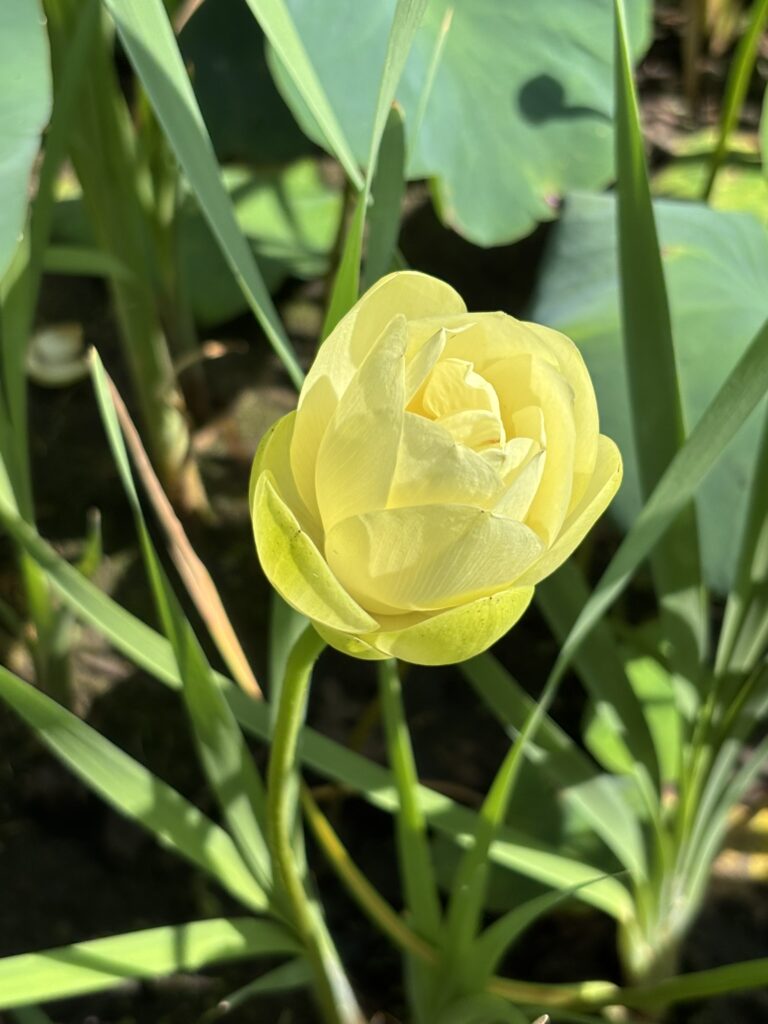
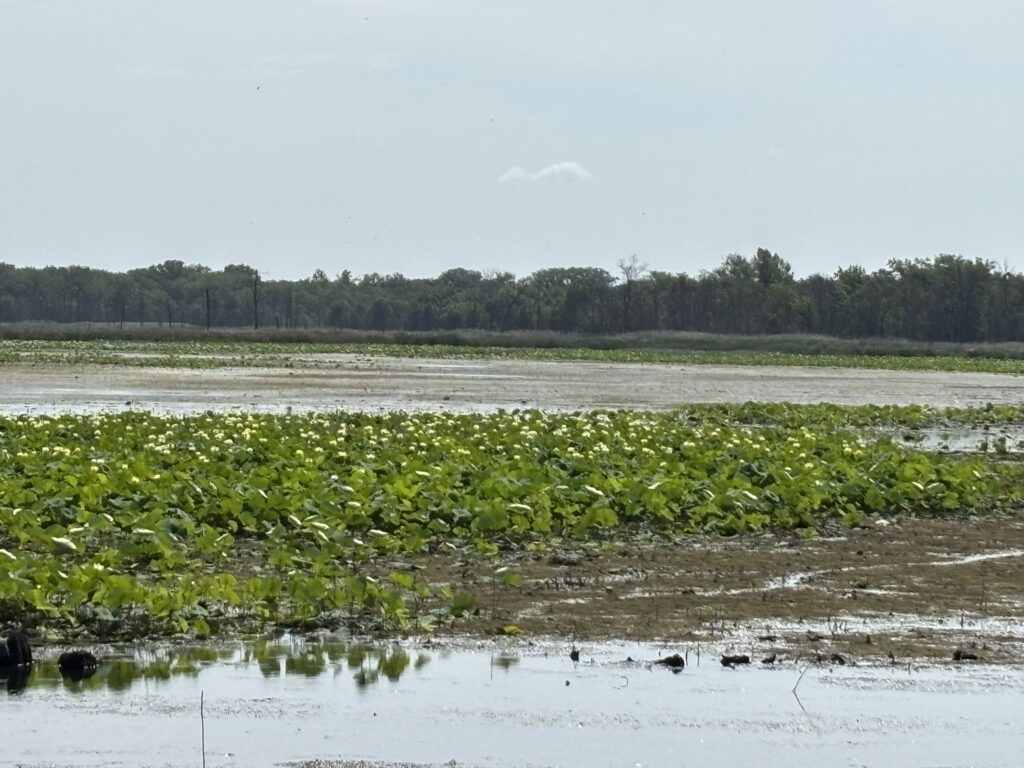
While we were there, Stuart took me to check out the river. We drove along a narrow road perched atop a levee and prayed that no other car would approach from the opposite direction. Yellow flowers dotted the clumps of American Lotus (Nelumbo lutea), their massive round lotus leaves poking out from the mud of Black Oak Bayou like solar panels. This article published in the American Midland Naturalist (1944) discusses the biology and native uses of this amazing plan in detail.
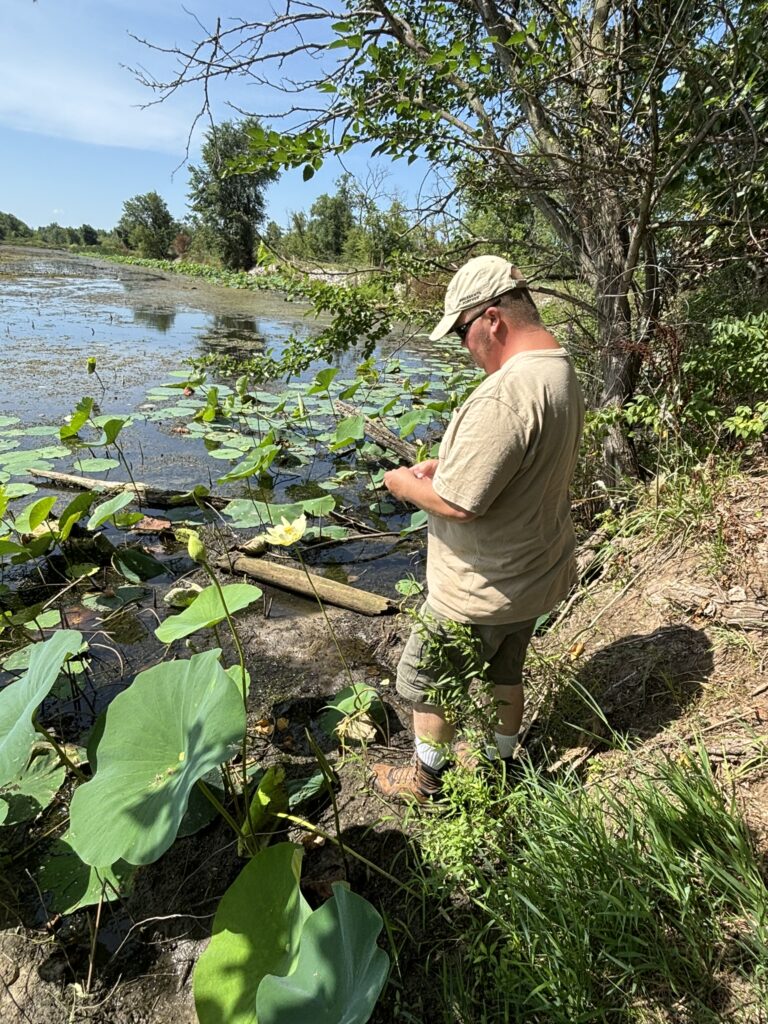
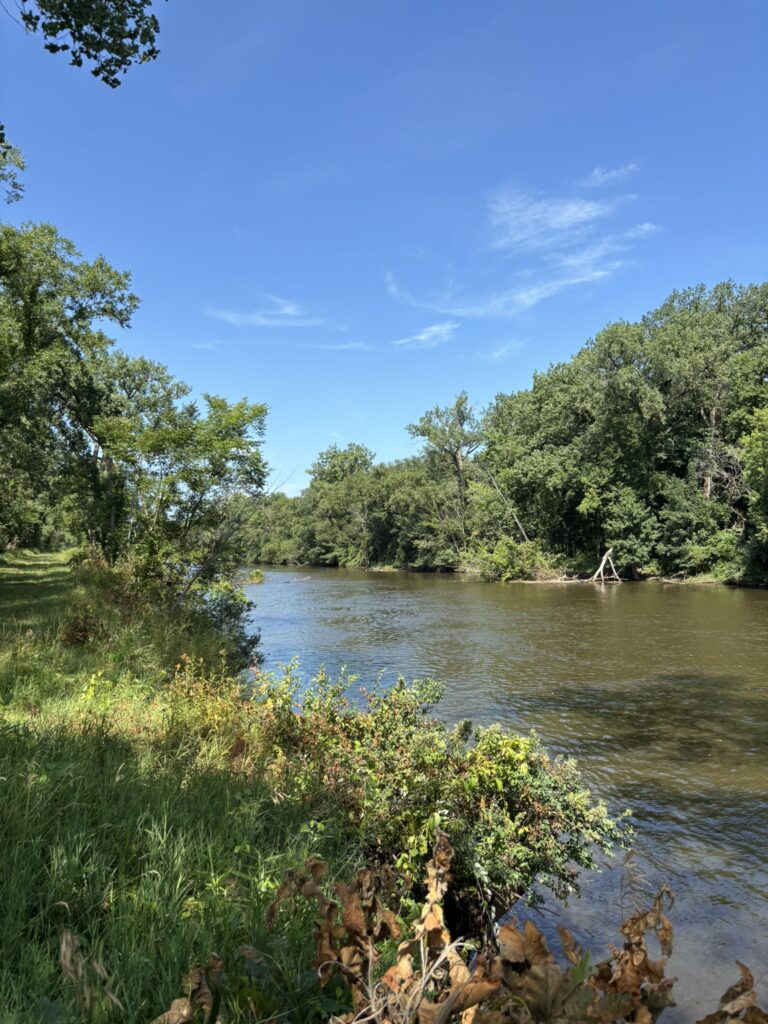
At the end of the levee road was a small parking area and another levee which met the road in a “t” shape. Beyond this second levee, the Kankakee river flowed swiftly past. We explored along the shore and found a few Eastern Pondhawk Dragonflies (Erythemis simplicicollis) and Halberd-leaf Rosemallow (Hibiscus laevis).
Angry River
We stopped to watch the wide Kankakee River. On a map of the area, Stuart showed me the remnants of the old river before the straightened it. These now formed little oxbow lakes, though when the river flooded it’s waters reunited with and refreshed them.
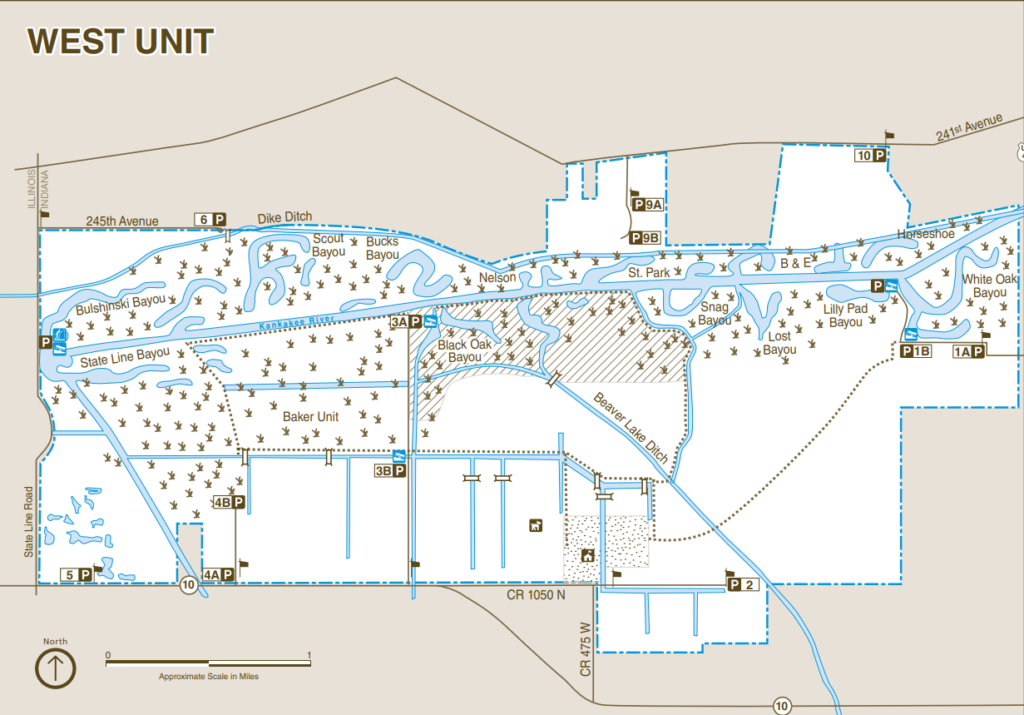
Looking at the map above, you can probably see it too- the ghost of the old river that once meandered through the Grand Kankakee Marsh, before it was straightened.
The Kankakee used to flow slowly, spilling over it’s shallow banks frequently, enriching the marsh and making the incredible diversity of the “Everglades of the North” possible. Now it is wide and straight and flows fast and angry. But on the opposite side where we walked, the river could still spill over it’s shallow banks and touch the remnants of it’s snake-like body. In Illinois, the river was allowed to keep it’s curves. I’d love to canoe it someday.
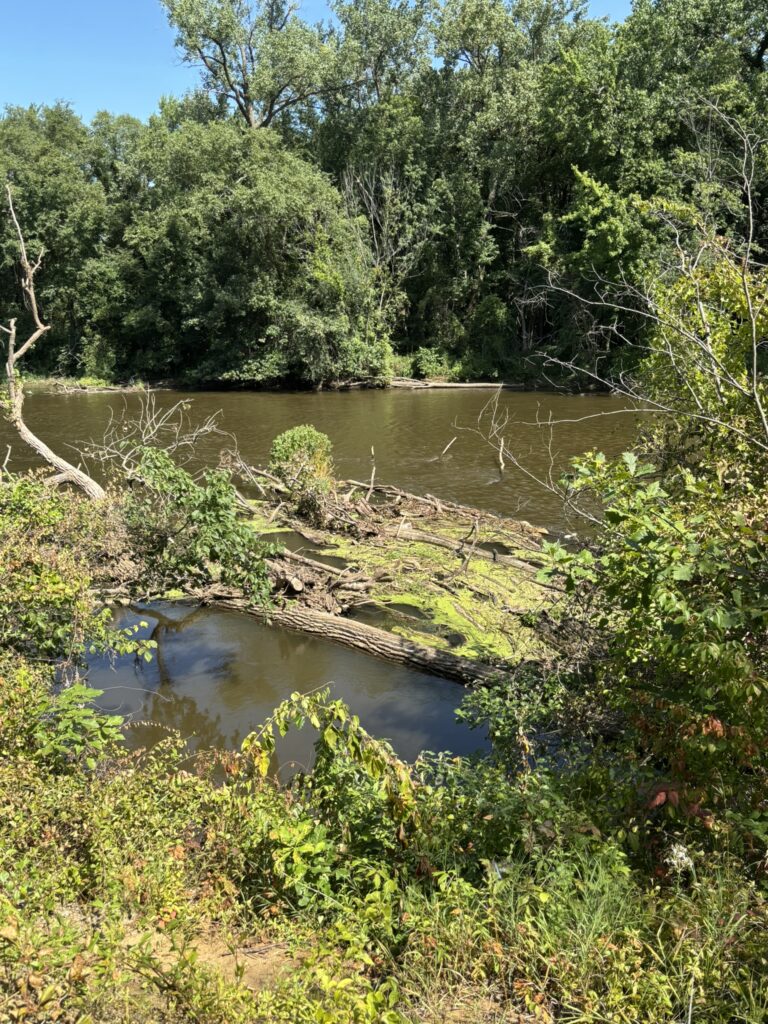
We found the remnants of a turtle nest along the levee- a snapping turtle Stuart guessed. I hoped that the eggs hatched but he said, given the time of year, it’s most likely the nest was dug up and the eggs were eaten.
It made me so sad to this of the marsh and the river forced into a new course over a hundred years ago, long before I or even my parents were born. Why couldn’t the river be left to it’s original course? I think about how we have a tendency to take, rather than receive- a dynamic that mars our relationships with each other, with the land, with God. That’s one of the reasons, for me the idea of an initial break with our creator where we attempted to take for ourselves that which was not given, resonates. I see this pattern everywhere.
Green Black Walnuts
We didn’t spot any black walnuts along the shore so we drove back to the ones Stuart noticed earlier and parked as far off the road as possible, flashers on. We did the monkey thing and plucked small unripe nuts from the trees, nocking them off with sticks (we’re tool users!) or pulling branches down to reach them. Soon we gathered what we thought might just be enough for a batch of Black Walnuts Syrup. At home, we washed and weighed the nuts and found we had enough for not one but three batches. Dear Friends, I hope this turns out well. If so, this will be part of your Christmas presents.
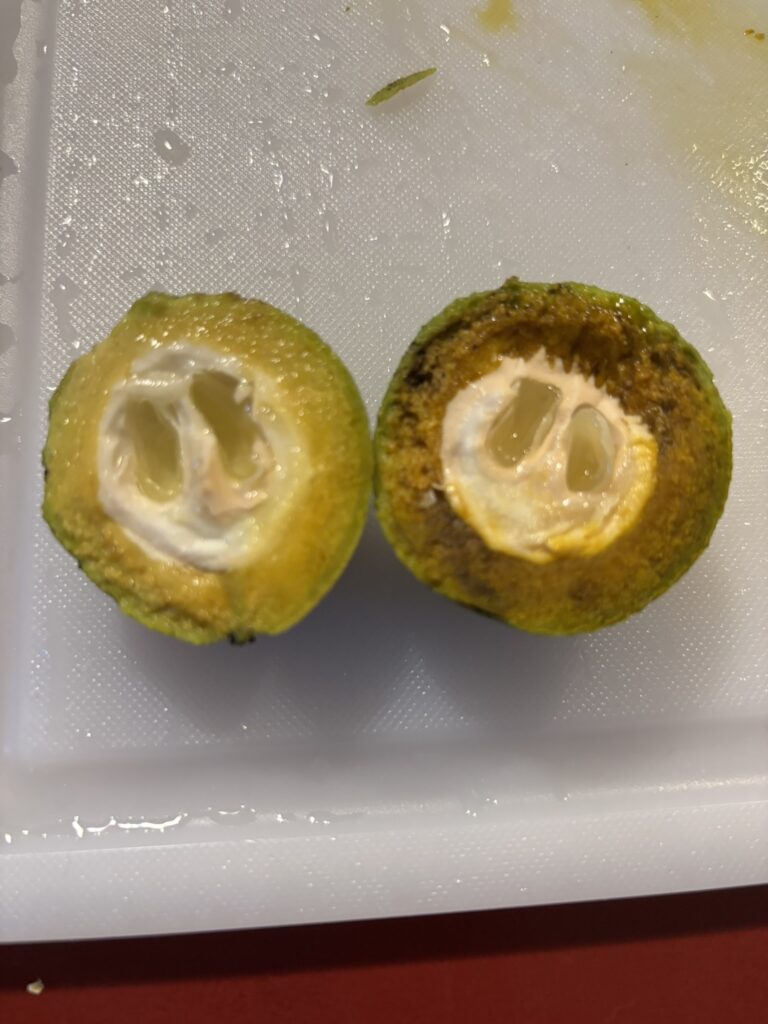
We followed the Forager Chef’s recipe and cut 1 pound of walnuts in half and combined them with two pounds of sugar and a little bit of maple syrup or honey to minimize crystallization. I thought it was interesting how quickly the cut walnuts faded from a bright white to a dark tan after being cut (see side by side photo below).
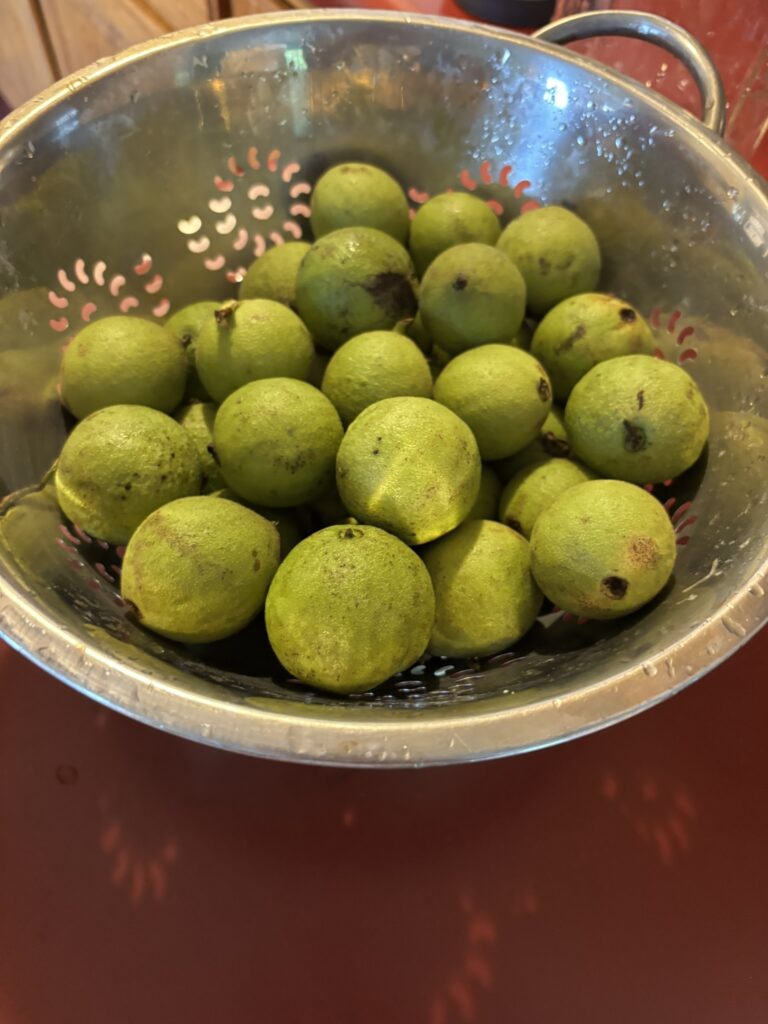
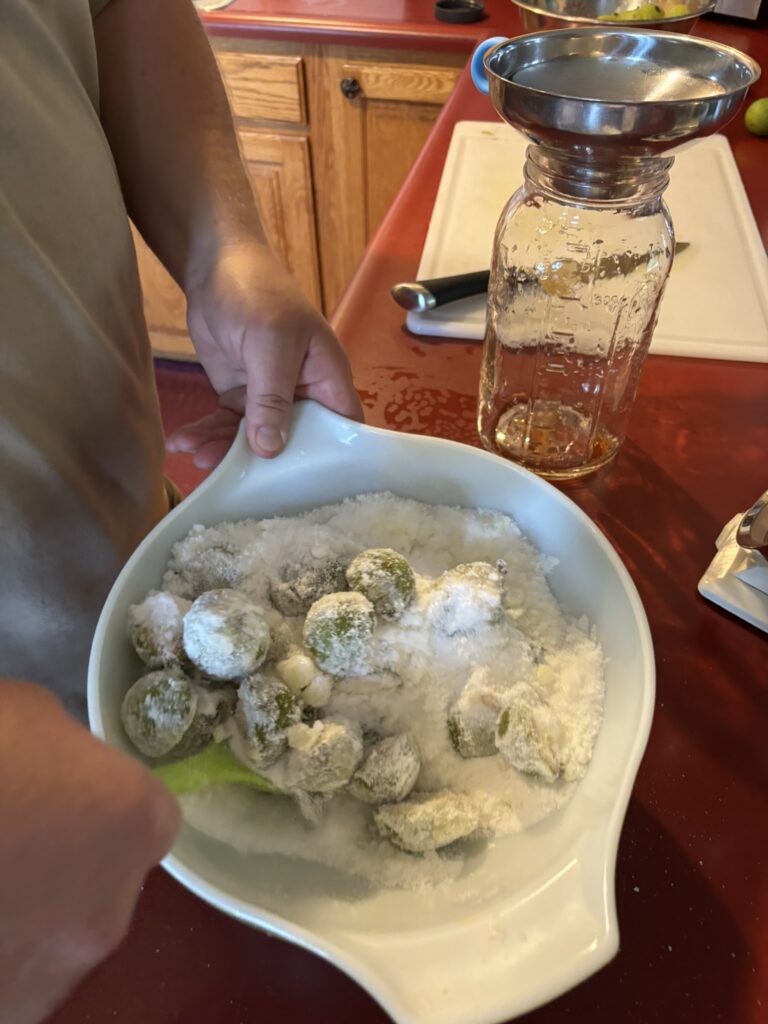
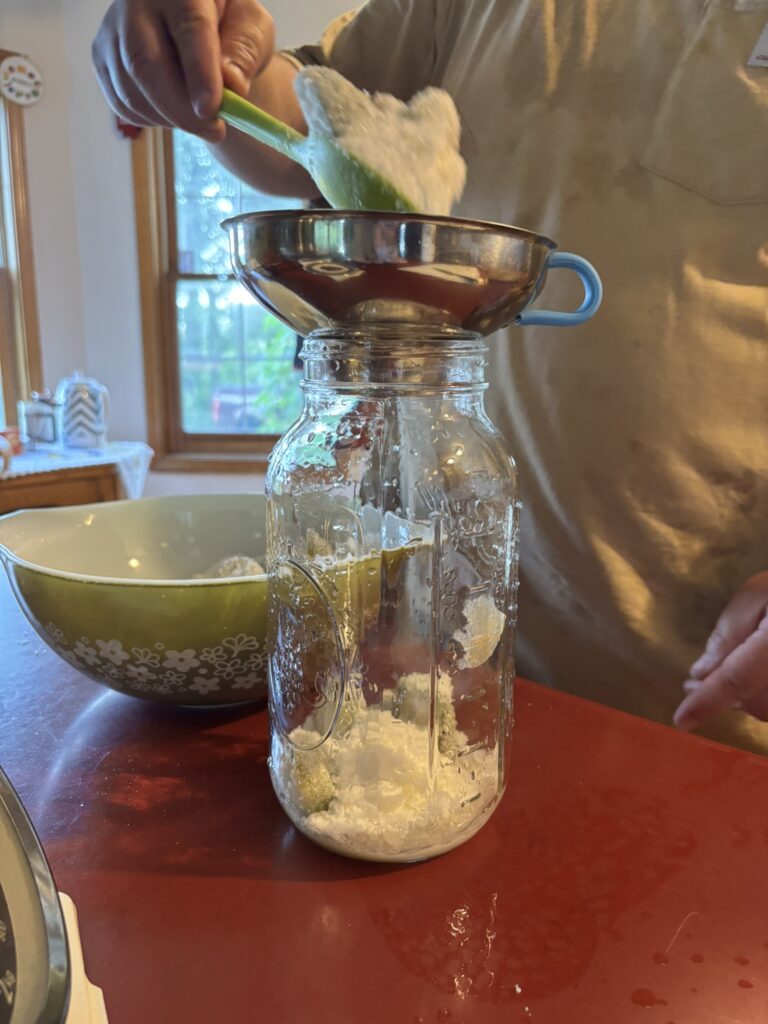
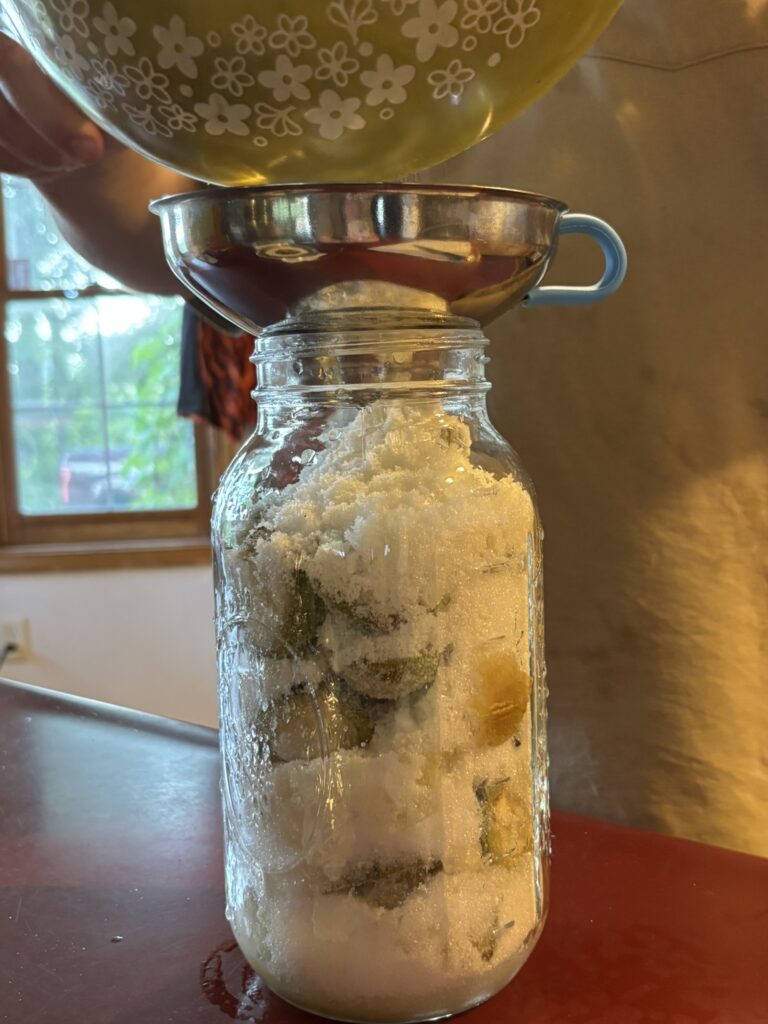
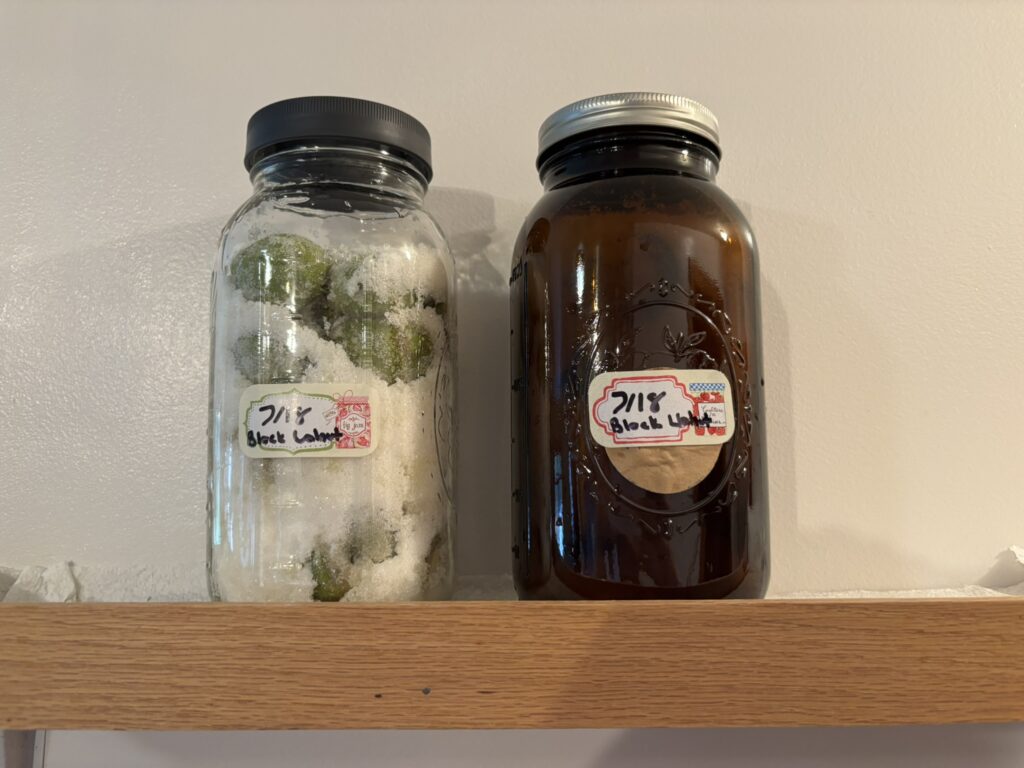
Now we just wait about 30 days or so and then decant the liquid. Apparently the remaining nuts can be soaked in vodka to make a nut liquor that can be sweetened with the syrup we made. I’m really excited to see how this turns out!
References:
Bergo, Alan. “Green Walnut Syrup (Molasses).” Forager | Chef. https://foragerchef.com/green-walnut-honey/
Hall, Thomas F., and William T. Penfound. “The Biology of the American Lotus, Nelumbo Lutea (Wild.) Pers.” The American Midland Naturalist 31, no. 3 (1944): 744–58. https://doi.org/10.2307/2421417.
Indiana Department of Natural Resources. “LaSalle Fish & Wildlife Area.” https://www.in.gov/dnr/fish-and-wildlife/properties/lasalle-fwa#Foraging
Indiana Department of Natural Resources. “History of Kankakee Fish & Wildlife Area.” https://www.in.gov/dnr/fish-and-wildlife/properties/kankakee-fwa/history-of-kankakee-fish-and-wildlife-area/
PBS. “Everglades of the North: The Story of the Grand Kankakee Marsh.” https://www.pbs.org/show/everglades-north-story-grand-kankakee-marsh/